



















When it comes to superyachts, Italy isn’t just one of many key players—it’s the leading player. According to the report The State of the Art of the Global Yachting Market, produced by Deloitte in collaboration with Confindustria Nautica and presented at the Borsa Italiana, in 2025 Italian shipyards accounted for 56% of global superyacht orders by unit and 36% by value, driven by names such as Azimut-Benetti, Sanlorenzo, and the Ferretti Group brands. This leadership was consolidated even as the global yachting market experienced a downturn.
The Italian shipbuilding industry grew by approximately 5% between 2023 and 2025, bucking the trend of the rest of the sector. Behind these figures lies a technological choice that permeated the entire high-end shipbuilding sector over the past few decades: the construction of composite hulls (fiberglass and carbon fiber) using vacuum infusion.
The principle is as simple as it is effective. The fiber layers are laid dry in the mold, then sealed under a vacuum-tight film; the vacuum generated inside draws in the resin, distributing it evenly through each layer until complete saturation. The result is a laminate with a much higher fiber-to-resin ratio than traditional hand-layup, without the air bubbles or uneven areas that would weaken the structure. A lighter hull, but also a stronger one. It’s no coincidence that Italian brands like Azimut built their “Carbon Tech” line precisely on this principle, with infusion-molded fiberglass hulls paired with carbon composite superstructures.
In shipyards, many facilities still work with simple vacuum pumps that draw directly from the mold, without a pressure reducer capable of regulating and maintaining a constant vacuum in the circuit. The result is a bank of pumps operating continuously, with the risk of overheating and frequent maintenance.
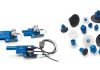
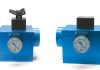
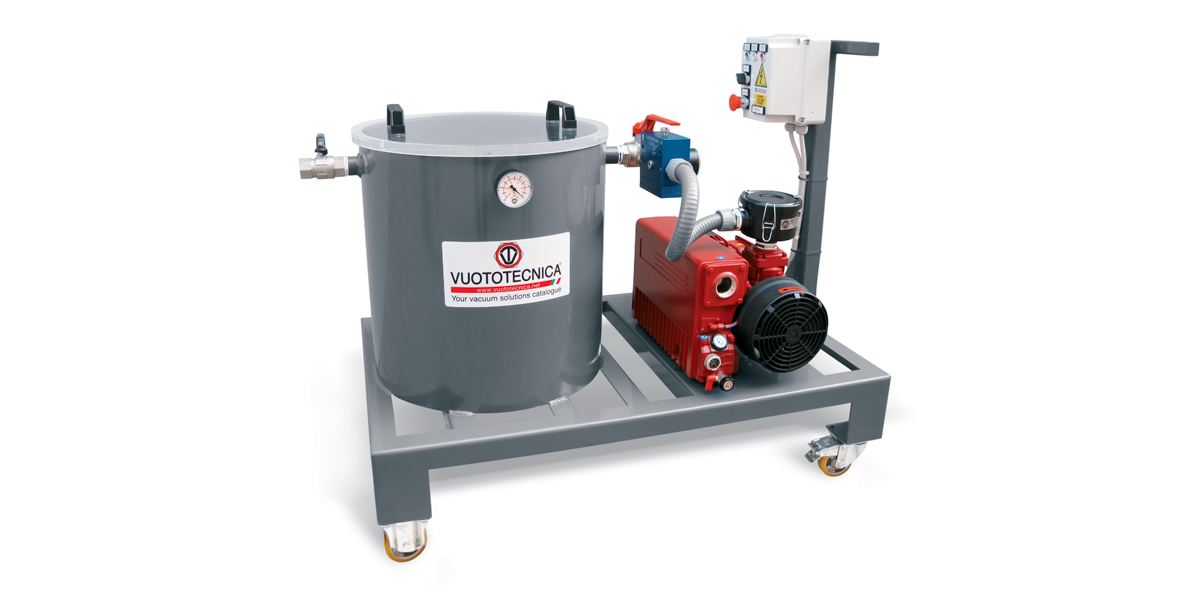
For this reason, Vuototecnica developed a mobile system designed for infusion and vacuum bagging, featuring oil-sealed pumps capable of achieving a vacuum level of 99.5% and a standard pressure regulator that allows for fine-tuning of the vacuum level between 20% and 99.5%, a detail that is anything but minor when it comes to pressing pre-impregnated carbon fibers inside a sealed bag, where it is precisely the uniformity of atmospheric pressure that guarantees the quality of the final laminate.
It is a small but emblematic example of how vacuum—an invisible physical phenomenon—becomes a necessary condition for the excellence of the hulls that carry Italy’s name across the world’s seas.