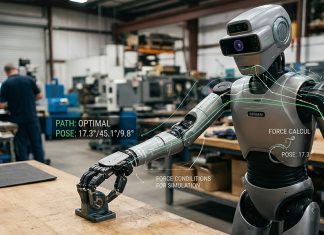

















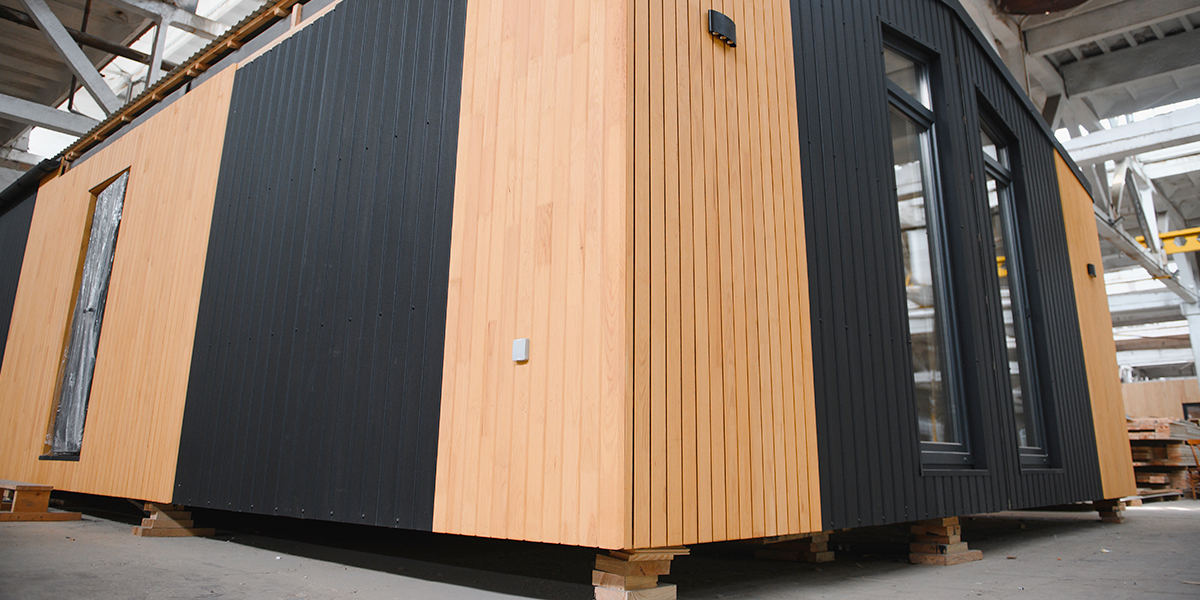
There is a quiet shift taking place in the wood construction industry, and it is as much technical as it is cultural: the sector is moving away from resembling a construction site and beginning to resemble a production line.
In Italy, wood construction is growing at a rate of 10% per year according to data from FederlegnoArredo, with a 32% jump in new prefabricated homes in 2023 compared to the previous two-year period. At the European level, wood already accounts for 42% of the prefabricated housing market, and it is precisely panel and component systems—those best suited for factory production rather than on-site assembly—that are growing the fastest, driven by increasingly advanced industrial automation.
In practice, this means that panels, beams, and semi-finished products—which were once cut and assembled by hand—now follow processes much more akin to those of a mechanical factory, involving numerically controlled cutting, CNC machining, gluing, assembly, and material handling, with all the repeatability and speed that this implies.
The problem is that wood does not behave like metal or glass because it is porous, releases dust during processing, has irregular surfaces, and exhibits varying levels of adhesion from panel to panel. Those who work with vacuum systems know this well, because it is precisely these details that determine the difference between a system that works and one that clogs up.
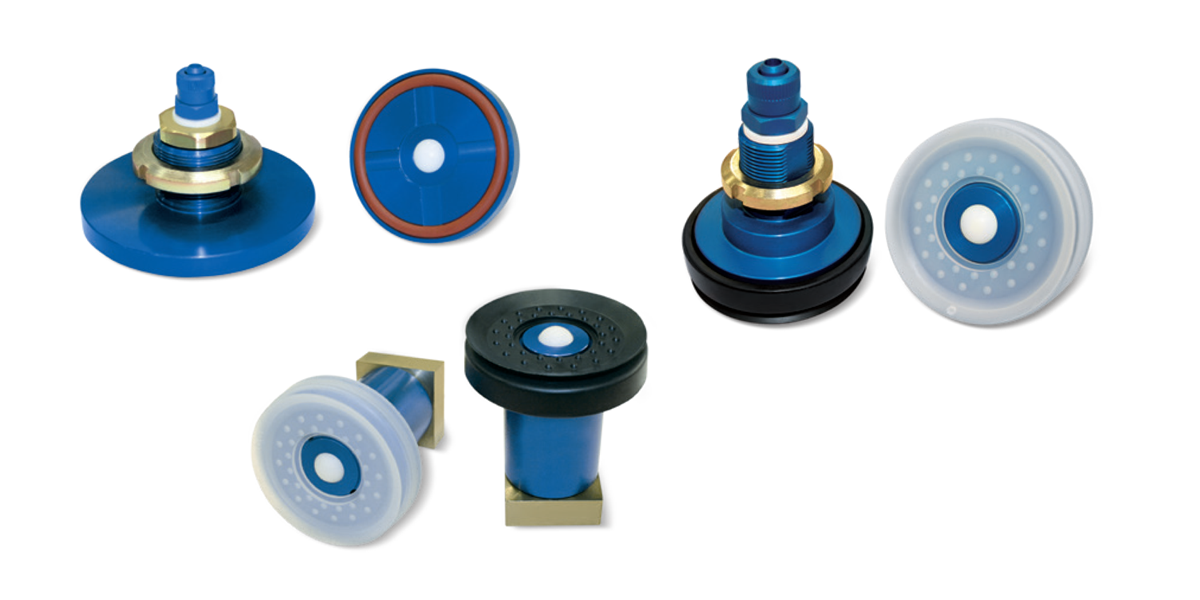
When it comes to cutting and CNC machining, for example, centers that mill, drill, and contour wood can benefit from vacuum mounting tables capable of holding the panel only where needed, as well as suction cups with ball valves that activate only when the weight of the workpiece triggers them, preventing the vacuum from escaping in areas of the table not covered by the material.
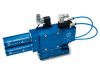
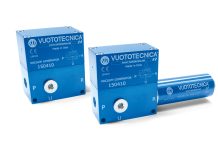
We discussed this here on the blog in relation to a specific case in Brianza—a historic hub for high-quality furniture—where a furniture manufacturer replaced the old rotary vane pumps on its clamping tables with Vuototecnica’s PVP300MD pneumatic vacuum generators: these are more compact, can be installed directly beneath the CNC table, and have no moving mechanical parts requiring maintenance other than a simple paper filter.
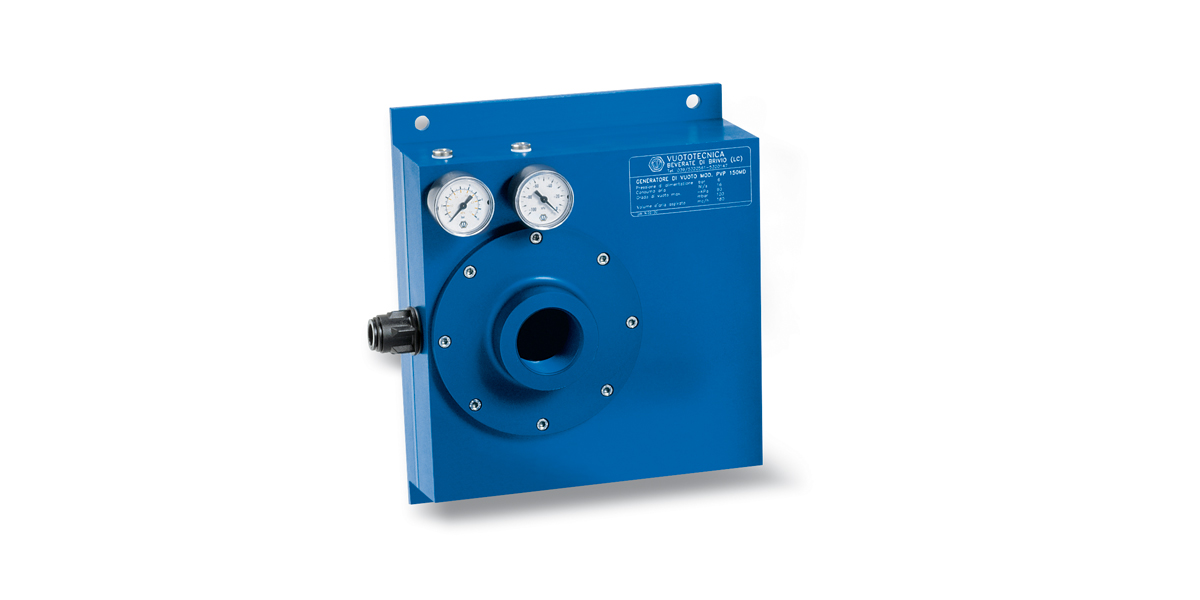
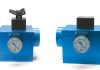
When paired with a unit like the Vacumanager, these generators allow compressed air consumption to be calibrated based on the specific porosity of the panel. A veneered wood panel maintains the vacuum differently than a raw panel, and the system adapts accordingly.
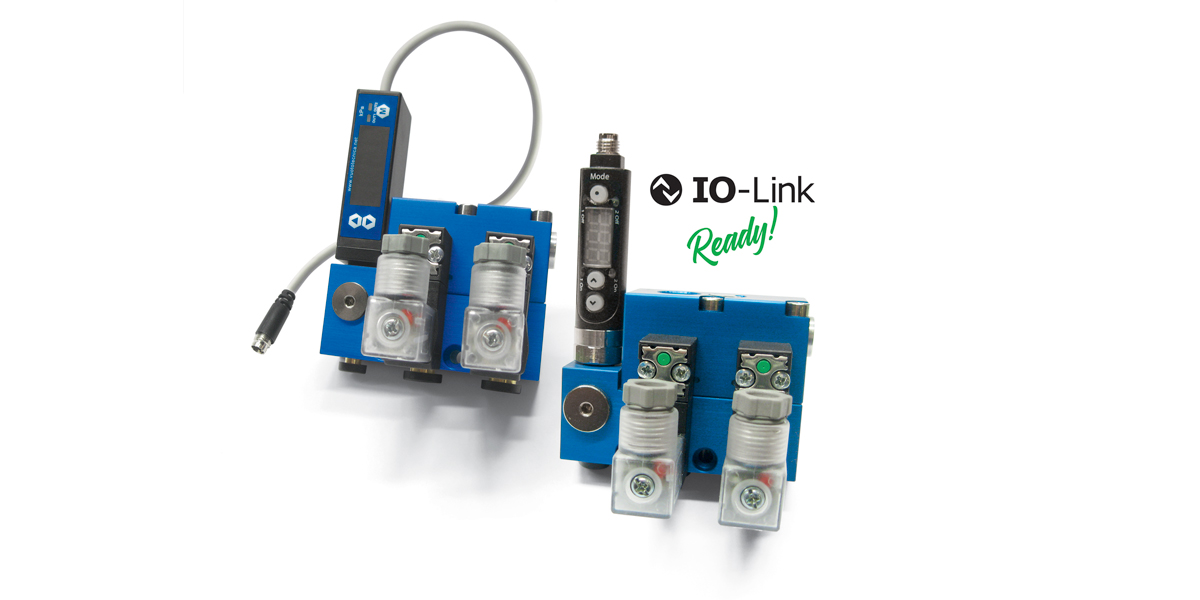
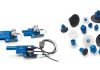
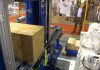
The dust problem also consistently arises during material handling. Wood panel stackers and destackers, when equipped with traditional pumps, tend to clog the suction filters, leading to overheating and frequent maintenance. The solution adopted by the industry is to decentralize the vacuum directly to the gripping clamp, using ejectors equipped with an integrated counter-blow that keeps the hoses and suction cups clean with every cycle, even allowing for a shaking action that helps separate stacked panels without letting wood dust compromise the grip.

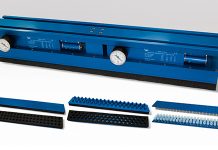
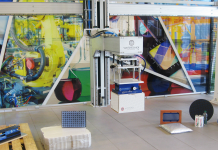
For more irregular shapes (boards, panels with holes, rough surfaces), systems like Octopus—with their soft-seal plate—maintain a secure grip even when the workpiece covers only 5% of the suction surface.
This journey clearly illustrates what it means today to industrialize a material that for centuries has been associated with craftsmanship—without distorting its essence, but by building technology around it capable of addressing challenges (dust, porosity, surfaces that are never identical) and transforming them into manageable variables.