


















There is a silent inefficiency that affects many industrial plants, and it is all the more insidious because it goes unnoticed. Sometimes the vacuum continues to be generated even when the suction cup picked up the object and is firmly sealed against its surface. The pneumatic ejector is running, compressed air flows out of the exhaust, and energy is consumed—even though the production cycle, in that fraction of a second, has no need for it. At a single gripping station, this waste may seem negligible. But when multiplied by dozens of gripping points, across shifts lasting several hours, and over an entire year of production, it becomes a cost item that is anything but invisible.
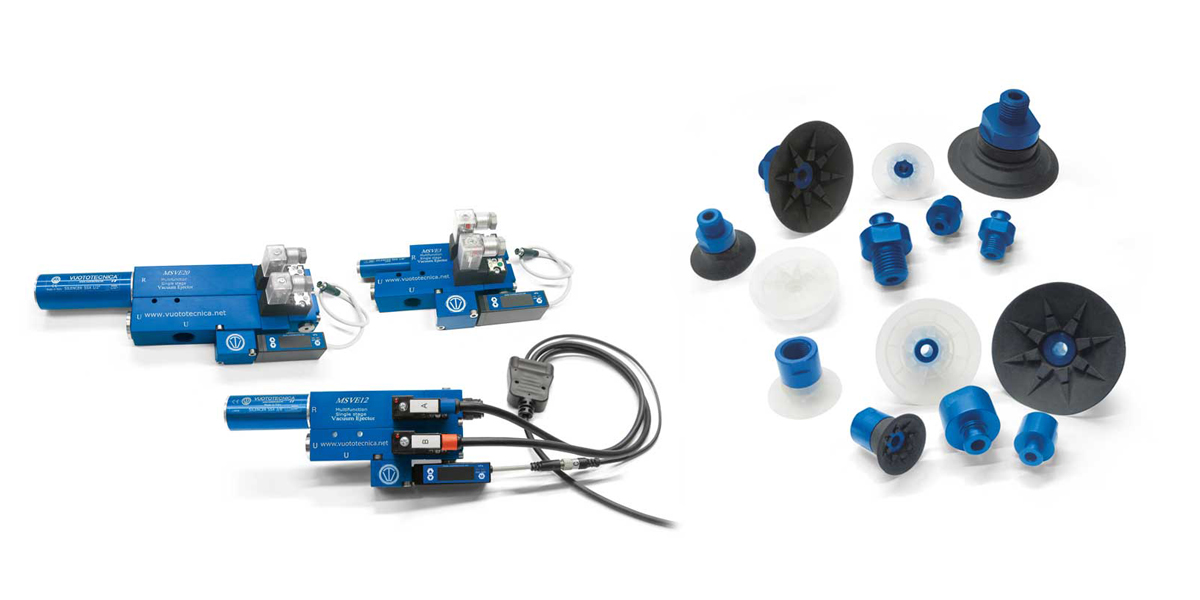
The principle of “vacuum on demand” was created precisely to correct this imbalance: generating vacuum only when needed and shutting it off when the task is complete. This isn’t a new concept for those who have been following the blog for some time; we’ve already discussed it in relation to the energy-saving hose for pot and pan suction cups and when talking about MSVE multifunction vacuum generators paired with Star Vacuum suction cups in the sheet metal industry, but it’s worth revisiting the topic with a broader perspective, because the mechanism is the same one that can be applied—with the appropriate adjustments—to a vast number of applications.
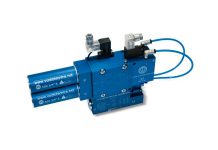
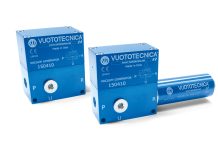
When the vacuum generator reaches the set vacuum level, a vacuum switch activates and shuts off the compressed air supply to the ejector, and a check valve mounted on the vacuum generator’s intake port maintains the vacuum inside the engaged suction cups. Only when the vacuum level drops below the minimum threshold set by the vacuum switch—due to a leak—does the supply reactivate; the generator operates just long enough to restore the correct value and then stops again. The result is an ejector that operates in pulses rather than continuously, with significantly lower compressed air consumption for the same performance.
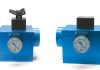
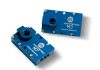
For this mechanism to function precisely, however, instruments capable of responding reliably are required. This is where vacuum switches, valves, and solenoid valves come into play; the Vuototecnica range includes digital models with displays and programmable hysteresis.
A poorly calibrated vacuum switch, or an inaccurate measurement of the vacuum level, is not just a performance issue; it can result in significant energy losses or, worse, pressure drops that compromise the grip’s safety. In other words, regulation is not a minor technical detail: it is the key to achieving savings.
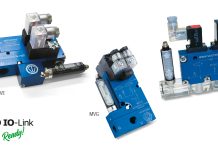
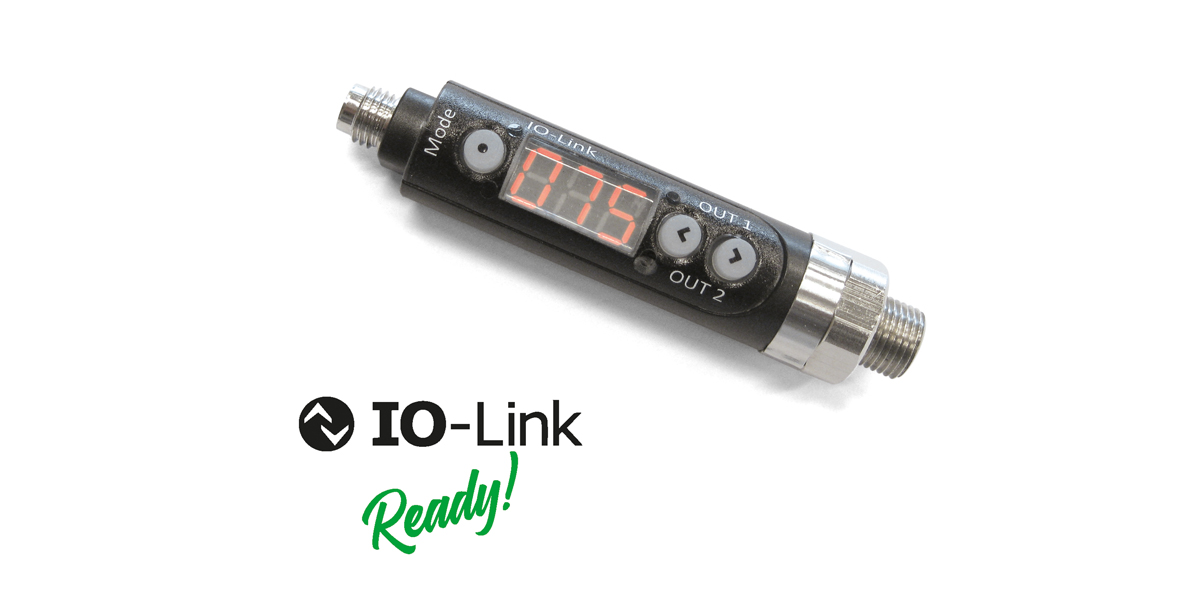
The most recent step in this direction concerns precisely how these devices communicate with the rest of the system. The 12 10 10 digital vacuum switch with an IO-Link interface, installed on MSVE, MVG, and GVMM vacuum generators, allows the PLC to read vacuum values in real time, but more importantly, to remotely set and modify operating parameters without requiring a technician to physically access the machine. This means being able to adjust the vacuum trigger threshold on demand, depending on the part being processed, and to collect, over time, the data necessary for predictive maintenance, identifying performance drops or leaks before they result in machine downtime.
Vuototecnica has been building its role as a partner in these improvements for years. Every application has its own balance between flow rate, cycle times, and grip strength. There is no one-size-fits-all solution for every production line; rather, a method is found—measure, adjust, and intervene only when necessary—that adapts to the specific context in which it is applied.
To learn more, please contact Vuototecnica’s design engineers at www.vuototecnica.net.